From Bitcoin Mining to AI Datacenters: How Public Miners Are Pivoting for Survival
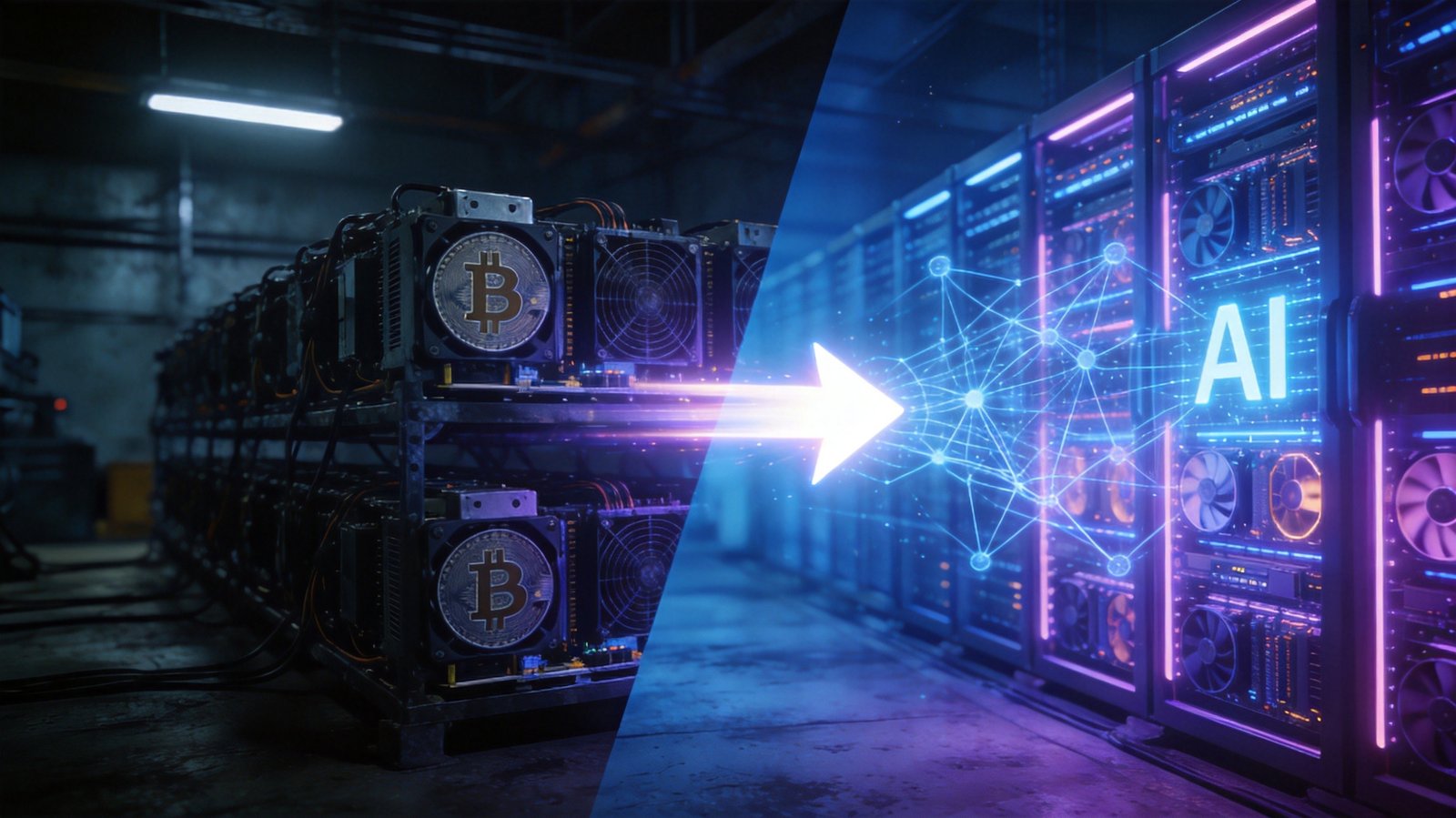
The Bitcoin mining industry is undergoing its most significant transformation since the 2021 China ban. Public mining companies are not just diversifying — they are fundamentally reimagining their business models. IREN has raised $3.65 billion for GPU infrastructure. TeraWulf’s HPC revenue now exceeds its Bitcoin mining income. Hut8 has locked in a $9.8 billion AI datacenter deal. This is the Great Miner Pivot of 2026.
MarsHub Research
Published July 4, 2026
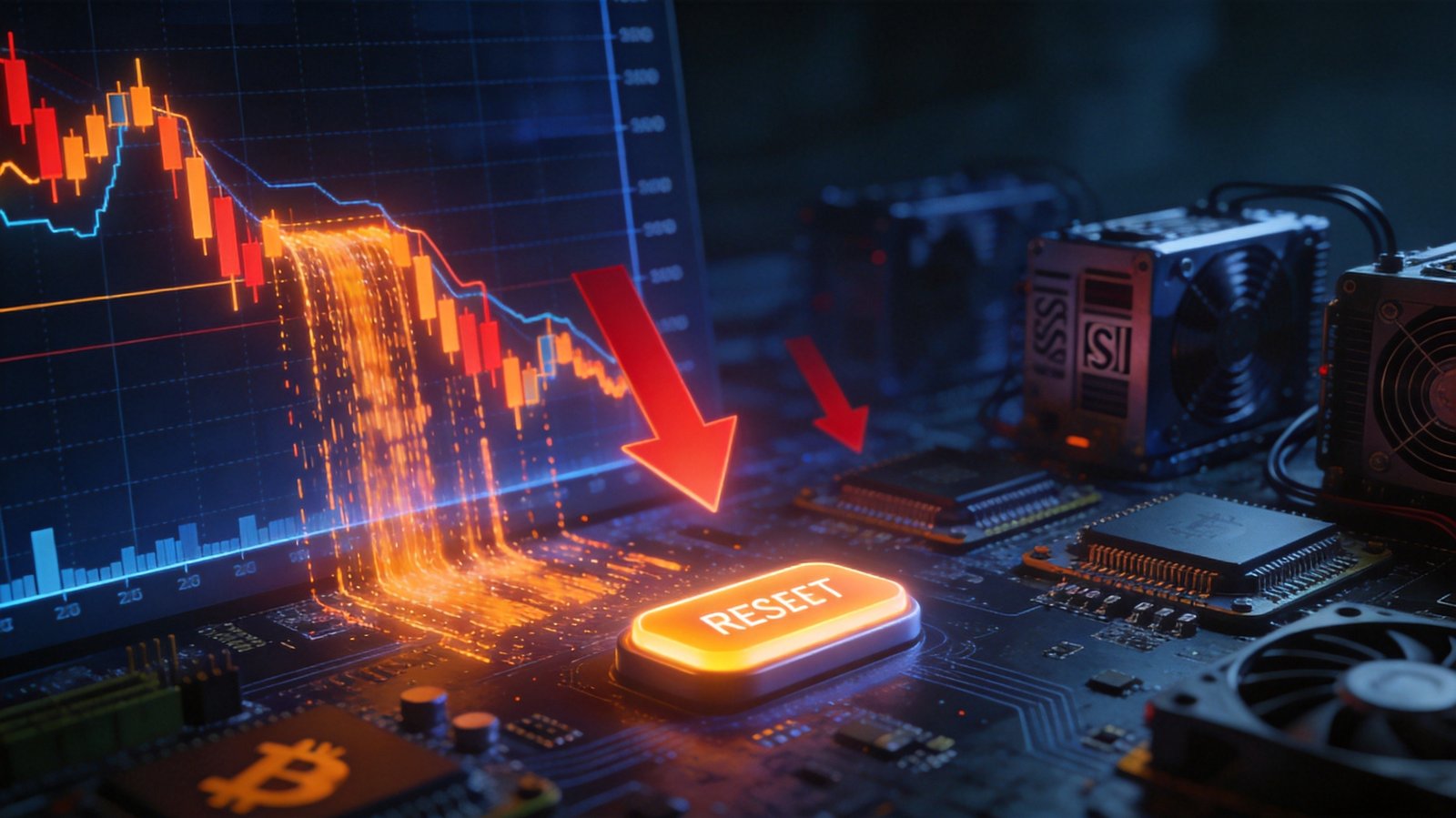
What began as tentative experiments in revenue diversification has become a full-scale industry transformation. In the first half of 2026, nearly every major publicly traded Bitcoin mining company has announced or expanded AI and high-performance computing (HPC) initiatives. The pivot is driven by a simple reality: with BTC trading below production costs and hashprice at record lows, mining alone cannot sustain the balance sheets of companies that carry significant debt loads and lease obligations.
IREN: The $3.65 Billion GPU Bet
IREN (formerly Iris Energy) has emerged as one of the most aggressive transformers in the space. The company completed a landmark $3.65 billion investment-grade GPU financing deal, rated A by Fitch — a remarkable achievement for a company that was primarily a Bitcoin miner just two years ago. The capital is earmarked for GPU infrastructure deployment supporting a major AI Cloud contract with Microsoft.
Beyond the financing, IREN has also moved decisively into European markets through the acquisition of Nostrum Group, a Spanish AI datacenter developer. This acquisition gives IREN an established footprint in a market where AI infrastructure demand is growing rapidly but supply remains constrained. The Nostrum deal signals that the miner-to-AI pivot is becoming a global phenomenon, not just a North American trend.
IREN’s strategy is instructive: rather than abandoning Bitcoin mining entirely, the company is pursuing a dual-track model where mining operations provide baseline revenue and utilize excess power capacity, while AI/HPC contracts deliver higher-margin, more predictable income streams. This approach allows IREN to maintain optionality across both business lines.
TeraWulf: HPC Revenue Overtakes Mining
Perhaps the most striking data point in the Great Pivot comes from TeraWulf. In Q1 2026, the company reported that its HPC revenue exceeded Bitcoin mining revenue for the first time — a milestone that management described as a “structural inflection point” in the company’s trajectory. TeraWulf has been converting portions of its mining infrastructure at its Lake Mariner facility in New York to support HPC workloads, leveraging the facility’s nuclear-powered electricity supply as a competitive advantage.
The significance of this crossover cannot be overstated. For a company originally founded as a pure-play Bitcoin miner, having HPC generate more revenue than mining signals a fundamental business model transformation. TeraWulf is not alone: multiple mid-tier miners are reportedly approaching similar inflection points, though few have disclosed the details publicly.
Hut8’s $9.8 Billion AI Anchor
Hut8 has taken the pivot to a new scale with a $9.8 billion, 15-year AI datacenter agreement — one of the largest contracts ever signed in the AI infrastructure space. The deal provides Hut8 with revenue visibility that dwarfs its Bitcoin mining operations and fundamentally changes its risk profile. The company has been actively converting mining sites to accommodate AI compute infrastructure, including GPU cluster deployments.
For Hut8, the AI deal provides more than just revenue: it gives the company access to capital markets on more favorable terms, as the contracted cash flows from the AI business significantly improve its credit profile. This financial engineering aspect of the pivot is as important as the operational transformation.
The Miners Still Doubling Down on Bitcoin
Not every miner is pivoting away from Bitcoin. CleanSpark produced 671 BTC in May 2026 with operational hashrate reaching 50 EH/s, demonstrating that pure-play mining at scale can still generate meaningful output. BitFuFu mined 177 BTC in May, with self-mining exceeding 50% of total production for the first time — a sign that the company is investing in its own infrastructure rather than relying solely on hosting revenues.
These companies represent the “conviction miners” who believe that BTC will eventually recover to levels that make pure mining economics viable again. Their strategy is essentially a bet on Bitcoin’s long-term price appreciation and the inevitability of difficulty adjustments that restore profitability during bearish periods.
The $50 Billion Funding Gap
According to a VanEck research report, miners pursuing the AI pivot face a collective funding gap of nearly $50 billion. The capital requirements for GPU procurement, datacenter retrofitting, and network infrastructure are orders of magnitude larger than what most miners have historically needed for Bitcoin mining operations. This funding gap is forcing miners to pursue increasingly creative financing structures: investment-grade bond issuances (as IREN demonstrated), long-term contracted revenue arrangements, joint ventures with hyperscale cloud providers, and in some cases, direct equity raises that dilute existing shareholders significantly.
The power capacity conversion from mining to HPC/AI is also a key driver of the network hashrate decline we have observed in 2026. As megawatts of mining capacity are physically redeployed to support AI workloads, that hashrate does not simply go offline — it migrates to a higher-value use case. This structural migration means that even if BTC prices recover, a portion of the displaced mining capacity may not return.
The Dual-Track Strategy: What It Means for the Mining Industry
The emerging consensus among public miners is the “dual-track strategy”: maintain Bitcoin mining operations as a base business while simultaneously building AI infrastructure on the side. This approach preserves the upside optionality of Bitcoin (if prices recover significantly, mining can be rapidly scaled up) while building the contracted revenue streams that capital markets reward with higher valuations.
For the broader mining ecosystem, this transformation has important implications. As public companies divert capital and power capacity toward AI, the competitive dynamics for independent miners change. Smaller operators who focus exclusively on efficient Bitcoin mining may actually benefit from reduced competition for power contracts and mining hardware. The key is maintaining low operating costs and high hardware efficiency.
MarsHub is a leading one-stop miner sales and mining farm hosting platform. As the industry evolves, we continue to provide top-tier ASIC mining equipment from BITMAIN and MicroBT alongside flexible hosting solutions that adapt to the changing landscape. Whether you are scaling up mining operations or exploring hybrid mining-and-HPC facility designs, our global hosting infrastructure and expert team can support your transition. Contact us for customized solutions that maximize the value of your power contracts and mining infrastructure.
Disclaimer: This article is provided for informational purposes only and does not constitute investment advice. References to specific companies and financial figures are based on publicly available disclosures and should not be interpreted as endorsements or recommendations. Always conduct your own research before making any financial decisions.
Want More Industry Insights?
Subscribe to MarsHub research. We publish in-depth market analysis and mining guides every week.